Understanding Asperges Kweken Basics
Asparagus, or “asperges” in Dutch, is a perennial vegetable that has been cultivated for thousands of years, prized for its unique flavor and tender texture. Growing your own asparagus can be a rewarding experience, allowing you to enjoy this delicacy fresh from your garden. However, it requires some knowledge and preparation to ensure a successful harvest. Whether you are a novice gardener or an experienced green thumb, understanding the fundamentals of asperges kweken is essential to your gardening success. This guide will provide you with detailed insights into every aspect of asparagus cultivation, from selecting the right varieties to harvesting your delicious spears.
What Are Asparagus Plants?
Asparagus (Asparagus officinalis) belongs to the lily family and thrives in temperate climates. These hardy perennial plants can last for 15 years or more when well-cared-for, making them a long-term addition to your garden. Typically, asparagus is available in two major varieties: green and white. Green asparagus is grown in sunlight, while white asparagus is cultivated under mounds of soil to inhibit chlorophyll development. Each variety offers unique flavors and uses, contributing to its popularity in various culinary dishes.
Ideal Growing Conditions for Asperges
Establishing the right growing conditions is crucial for successful asparagus cultivation. Asparagus prefers well-drained sandy loam soil rich in organic matter. The pH level should range between 7.0 and 7.5 for optimal growth. Additionally, asparagus thrives in locations that receive full sun, needing at least 6 to 8 hours of direct sunlight daily. Proper drainage is essential because asparagus roots are susceptible to rot in overly wet conditions. Thus, testing your soil, improving its structure as necessary, and choosing an appropriate planting site are fundamental steps in the planting process.
Choosing the Right Varieties for Your Garden
When selecting asparagus varieties, consider your local climate, soil conditions, and personal taste preferences. Popular varieties include ‘Jersey Knight’ and ‘Purple Passion.’ ‘Jersey Knight’ is renowned for its high yield and resistance to pests and diseases, while ‘Purple Passion’ offers a sweeter flavor and vibrant color. It’s beneficial to choose a variety suited to your specific growing conditions and culinary needs, ensuring a healthy and productive asparagus patch.
Preparing Your Garden for Asperges Kweken
Soil Preparation Techniques
Preparing the soil for asparagus isn’t just about planting; it’s about creating a favorable environment for the plants to thrive. Start by testing your soil for pH and nutrient content, then amend it as needed with organic matter like compost or well-rotted manure. Digging in these amendments improves soil texture and nutrient availability. Aim to till the soil to a depth of 12 to 18 inches, breaking up any hard clumps to create a loose bed that allows for proper root development.
Setting Up Planting Rows
Asparagus crowns should be planted in trenches to promote healthy growth and easier harvesting. Dig a trench about 12 inches deep and 12 inches wide. Space each trench about 4 to 5 feet apart to allow for mature plant growth. When placing the crowns in the trench, spread the roots out gently, creating a small mound of soil underneath. This encourages even growth and prevents crown rot. Once positioned, cover the crowns with 2 inches of soil, gradually filling the trench as the plants grow.
Essential Gardening Tools You Need
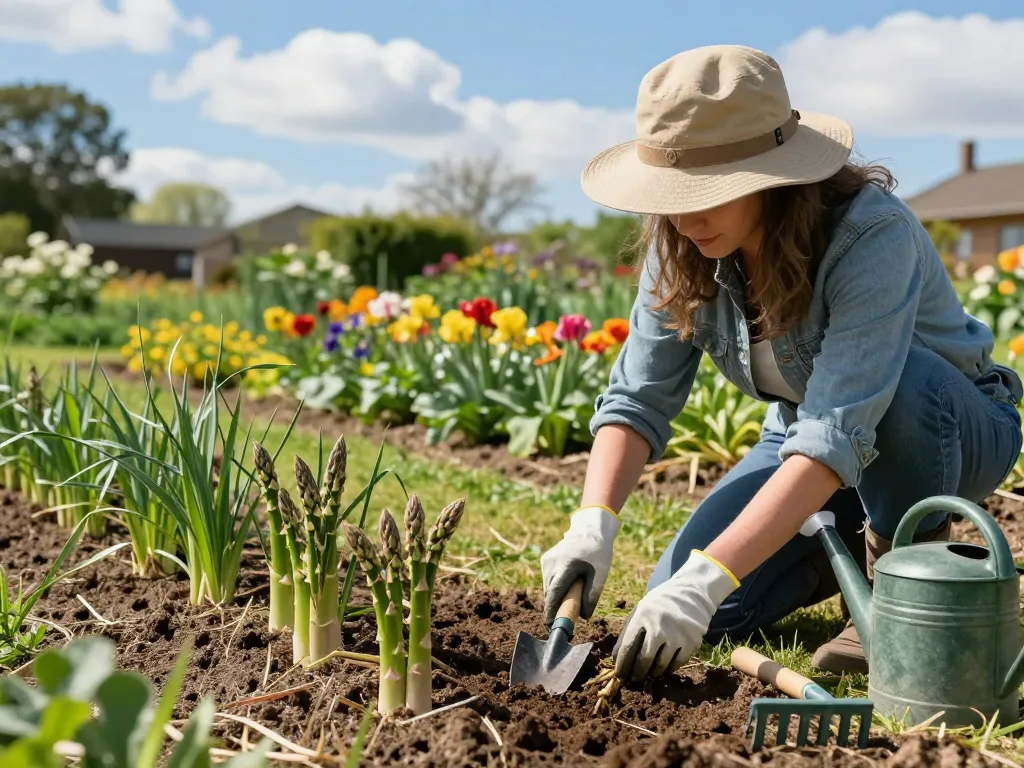
To successfully grow asparagus, certain tools can make the process easier and more effective. Some essential tools include:
- Garden Spade: For digging and turning soil.
- Trowel: Ideal for planting crowns and weeding around the plants.
- Rake: For leveling soil and removing debris.
- Watering Can or Hose: Important for watering young plants.
- Mulch: Organic mulch to suppress weeds and retain moisture.
Having the right tools not only simplifies planting and maintenance but also contributes to overall plant health and growth.
Planting Asperges: Step-by-Step Guide
When to Plant Your Asparagus Crowns
The best time to plant asparagus crowns is early spring, approximately 2 to 4 weeks before the last frost date for your area. This timing allows the crowns to establish roots before the growing season ramps up. In warmer climates, you may also consider a planting in the fall. Avoid planting during extremely wet or overly dry conditions, as both can harm the delicate crowns.
How to Properly Plant Asparagus
After preparing your soil and gathering your crowns, the planting process can begin. Place the crowns in the trenches and cover them with about 2 inches of soil at first. As the plants grow, gradually fill in the trench with more soil, ensuring the crowns are never buried too deeply. Aim to keep the soil moist but not soggy, allowing the roots to develop strong anchor support.
Spacing Requirements for Optimal Growth
Proper spacing between asparagus plants is critical for their development. Each crown should be spaced about 18 to 24 inches apart within the row, allowing ample room for the plants to spread without overcrowding. Additionally, rows should be spaced about 4 feet apart to facilitate easy access during harvesting and maintenance.
Caring for Your Asparagus Plants
Watering and Fertilizing Guidelines
Asparagus plants require consistent moisture, especially during their first two years of establishment. Water thoroughly but avoid waterlogging the soil. Fertilization should occur during the growing season with a balanced fertilizer, usually applied once a month. Organic options, like compost or fish emulsion, can also be beneficial and support healthy growth.
Pest Control Strategies in Asparagus Cultivation
Pests can pose a significant threat to asparagus plants, with common culprits including the asparagus beetle and aphids. Regular inspection of your plants can help catch infestations early. Utilizing organic insecticides or introducing beneficial insects like ladybugs can control pest populations. Moreover, maintaining good sanitation by clearing dead plant debris reduces the chance of pest problems.
Signs of Healthy Asparagus Growth
Healthy asparagus plants exhibit vibrant green foliage and sturdy spears. In their first year, expect limited growth, focusing on building a strong root system. Over time, established plants will produce a robust canopy, with spears emerging in early spring that are firm and straight. Regularly monitoring your plants for any signs of stress, such as yellowing leaves or stunted growth, helps catch issues before they escalate.
Harvesting and Enjoying Your Asperges
When to Harvest Asparagus
Harvesting asparagus requires patience, especially in the early years. Generally, you should wait until the plants are at least 2 to 3 years old before harvesting. During the harvesting season, which typically runs from early spring to early summer, cut spears when they reach about 6 to 8 inches in height. This size ensures the spears are tender and flavorful.
Best Practices for Harvesting
When harvesting, use a sharp knife or garden scissors to cut the spears at ground level. Be careful not to damage the remaining shoots or the plant’s crown. Harvesting can typically continue for about 6 to 8 weeks before the plants are left to grow and ferns develop, which helps replenish the plant’s energy for next year.
Delicious Recipes Featuring Fresh Asparagus
Fresh asparagus is incredibly versatile and can be enjoyed in a variety of dishes. Consider trying it roasted with olive oil and garlic, grilled as a side dish, or steamed and tossed into salads. Additionally, asparagus pairs beautifully with lemon, parmesan cheese, and even in creamy risottos. The possibilities are endless, making it a valuable addition to any meal.
What Are the Benefits of Growing Your Own Asperges?
Growing your own asparagus offers numerous benefits, including better flavor, nutritional value, and cost savings. Freshly harvested asparagus is richer in vitamins A, C, E, and K compared to store-bought varieties. Additionally, cultivating your own asparagus means you can control how it’s grown, opting for organic practices if you choose.
Can Asperges Be Grown in Containers?
Absolutely! Container gardening can be an excellent option for those with limited space or specific gardening conditions. Choose deep containers, at least 12 inches deep, and ensure proper drainage. Plant one crown per container and provide sufficient sunlight and regular watering to support healthy growth.
What Common Mistakes Should I Avoid When Growing Asperges?
Common mistakes in asparagus cultivation include overcrowding, improper watering, and neglecting soil health. Ensure you’re providing adequate space for each plant to thrive. Overwatering can lead to root rot, while neglecting soil amendments can hinder growth. Remember to be patient; asparagus takes time to establish itself and flourish.